


UV Safety Awareness Month: How to Keep Safe in the Sun
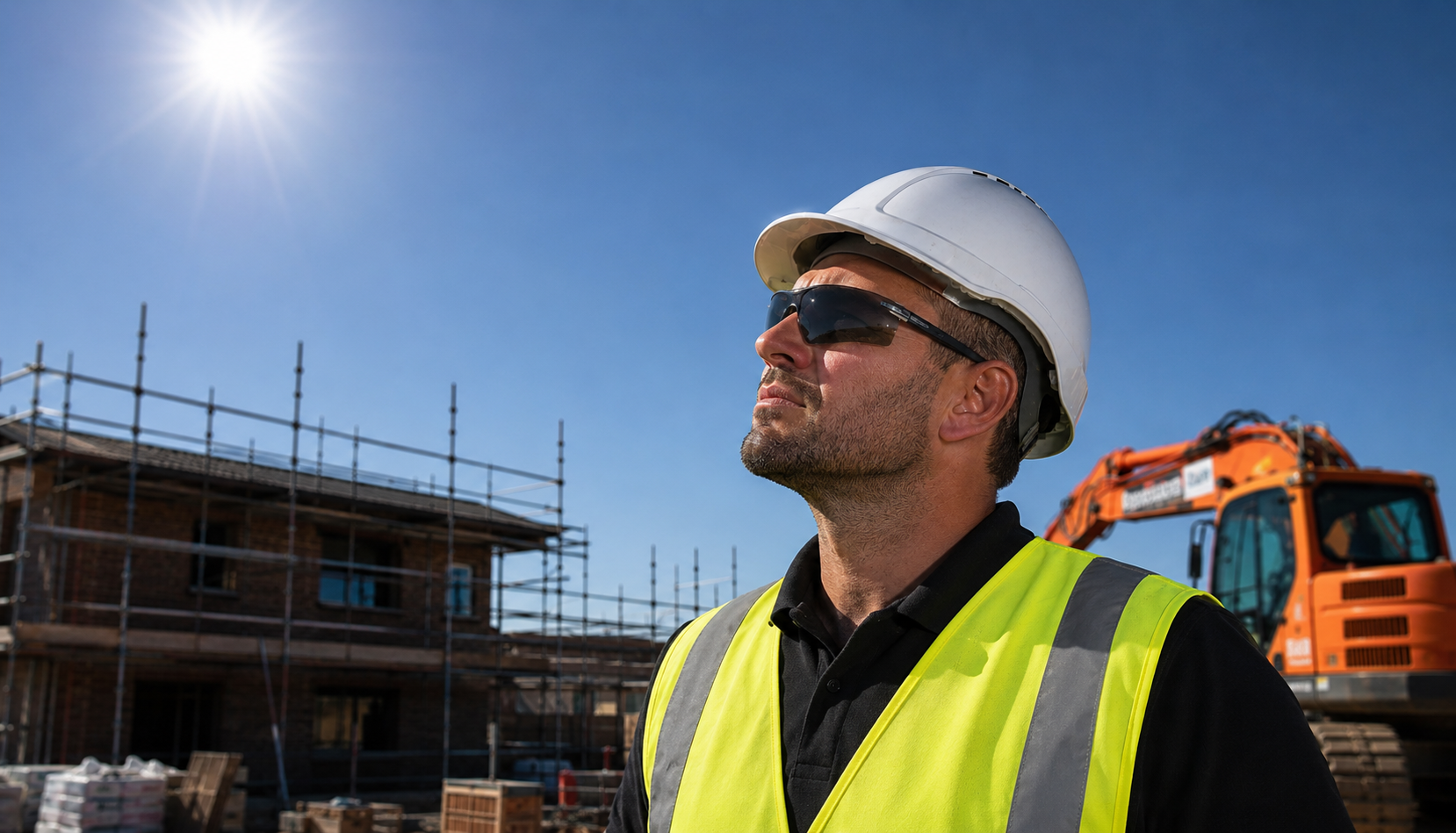
July is UV Safety Awareness Month, and it's the perfect opportunity for construction sites across the UK to get serious about one of the most overlooked health risks in the industry.
UV risk is well understood and entirely manageable. With the right products and processes in place, it's also easily addressed. This guide breaks down everything site leaders and procurement professionals need to know to protect their workforces across this summer and beyond.
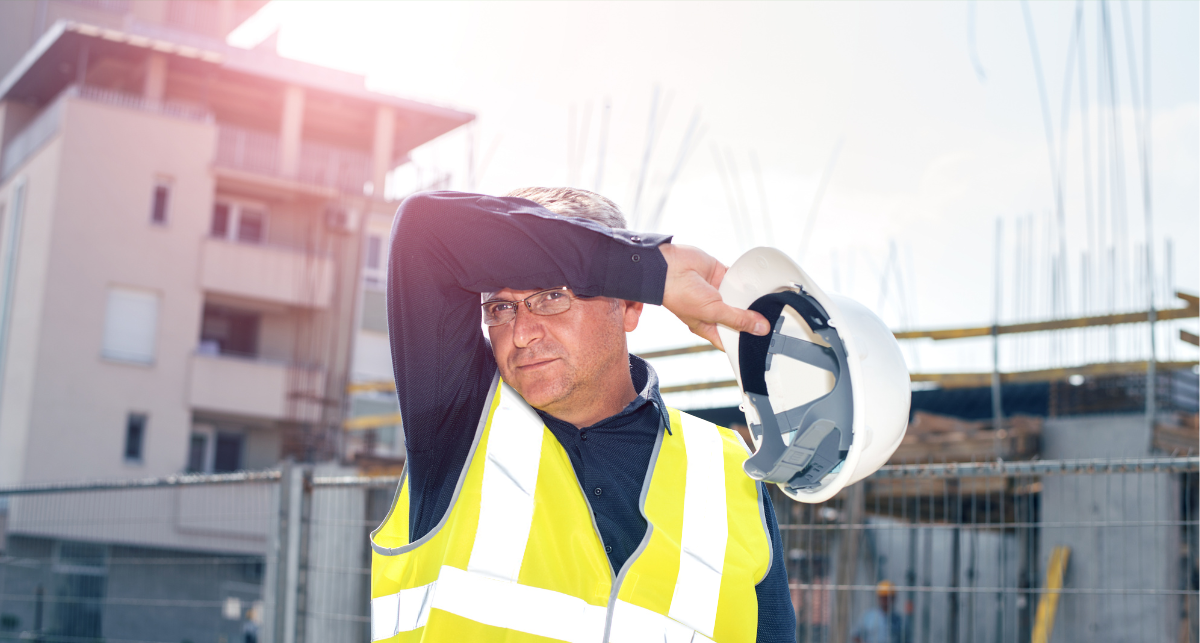
Understanding UV Radiation on UK Worksites
One of the most common misconceptions in construction is that the UK climate doesn't pose a serious UV risk. On UV Safety Awareness Month, we're dispelling that myth.
Workers and managers tend to associate sun damage with holidays abroad, not a working day on a UK building site in April or September. However, it's worth noting the HSE's guidance on solar radiation - even on overcast days. The guidance confirms that cloud cover doesn't reliably block UV rays, and that workers can sustain significant exposure without feeling hot or uncomfortable.
While the risk is manageable, it often goes under the radar. Research commissioned by IOSH from Imperial College London found that construction workers account for 55% of all work-related non-melanoma skin cancer cases in Britain: a higher proportion than any other industry. That reflects the reality of working outdoors for long hours across some of the highest UV months of the year.
When Is the Risk Highest?
In the UK, UV levels are at their most significant between March and October, with peak intensity between 11am and 3pm. This window overlaps directly with the core working day across spring, summer and early autumn. Anyone spending meaningful time outdoors is accumulating exposure at levels worth taking seriously.
Your Organisation's Legal Position
The Health and Safety at Work Act 1974 places a duty on every employer to ensure - as far as reasonably practicable - the health of their employees, and the Management of Health and Safety at Work Regulations 1999 requires a risk assessment that explicitly covers UV radiation.
For procurement professionals and site decision-makers, this is straightforward to act on. The products specified, the PPE included in a site set-up, and the welfare provisions ordered all feed into whether an organisation is meeting its duty of care. Getting it right is simpler than most people think.
Building a UV Protection Strategy for Your Site
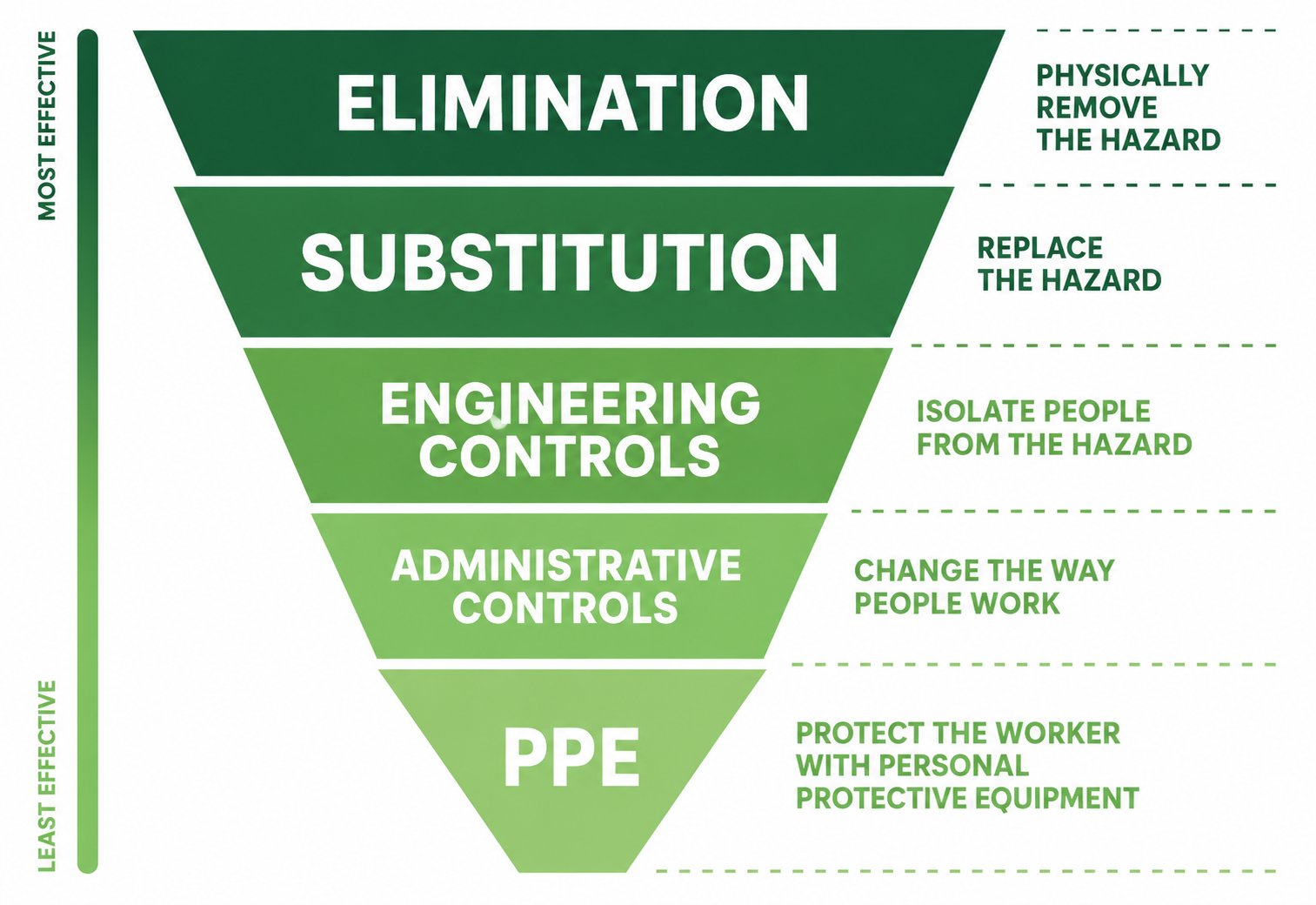
The Hierarchy of Control Applied to UV Risk
-
Eliminate or reduce exposure: Schedule UV-intensive outdoor tasks outside peak hours where possible. Rotating workers between outdoor and shaded tasks during the 11am to 3pm window is a simple and effective way to reduce cumulative exposure.
-
Engineering & environmental controls: Provide shaded rest areas and welfare facilities. Positioning welfare units to offer shade during breaks is an easy win at the planning stage with a real impact on daily exposure levels.
-
Administrative controls: Brief workers on UV risk during inductions as a genuine safety topic. Post UV index information on site and encourage teams to check the Met Office UV forecast during high-risk months.
-
PPE & skin care products: When exposure cannot be eliminated or sufficiently reduced, the right PPE and skin care products are the final line of defence.
-
Workwear and hi-vis: Bryson's hi-vis and workwear range includes lightweight, long-sleeved options that provide UV coverage without overheating workers. Specifying long-sleeved garments as standard between March and October is one of the most straightforward protective measures available.
-
Head protection: Standard hard hats leave the face, neck and ears exposed. Peaked helmet attachments and neck protection accessories reduce the skin surface receiving direct UV exposure throughout the day.
-
Skin care: Bryson's industrial skin care range includes high-factor sun protection designed for site use. Research cited by the British Safety Council found that 16% of workers who don't use sun protection cite its absence at work as the reason. Making SPF50+ sunscreen available at welfare units is a low-cost fix with a direct impact.
-
Gloves and PPE: Hands and forearms are among the most consistently exposed areas on site. Appropriate glove selection reduces UV exposure across long outdoor shifts.
-
Making Sun Safety Part of Your Site Culture
IOSH research has found that the majority of workers on UK construction sites don't use protective measures against UV exposure, largely because of the widespread belief that the UK climate doesn't pose a serious risk. Shifting that perception doesn't require a big budget or a lengthy programme.
When sun protection is built into inductions, when SPF50+ sunscreen sits alongside soap in the welfare unit, and when long-sleeved hi-vis is the default specification, workers get a clear signal that their employer takes this seriously.
Brief your teams on the UV index during high-risk months. When managers model sun-safe behaviour, uptake follows quickly. Small cultural shifts, consistently applied, make a significant difference.
Bryson: Keeping Sites Safe this Summer
Construction workers carry a disproportionate share of the UV risk in this country. With the right products, the right processes and a straightforward approach to site culture, your workforce does not have to. Bryson has everything you need to put a solid UV protection strategy in place: Book an Appointment with one of our specialists or register an account to get started today.

 Loading, please wait