


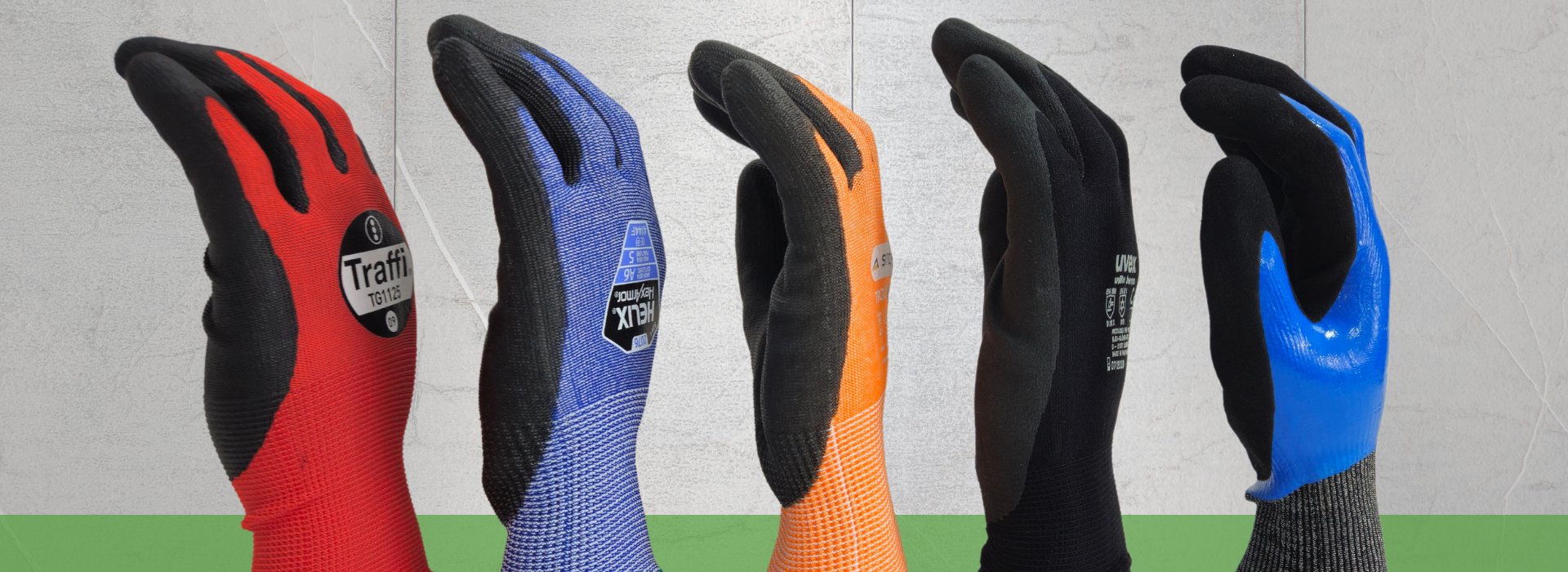
Handy on Worksites: A Guide to Choosing the Perfect Gloves
When you’re working on a construction site, gloves are more than just a fashion statement. The fact is that every tool matters and gloves are among the most essential. We’ll help you find the perfect fit, exploring the regulations that mandate the use of gloves with expert tips on finding the right pair for the task at hand.
Just like helmets, safety vests and harnesses, gloves are a safety essential on virtually any construction site. And, in the vast majority of projects you’ll be working on, your hands will be in for some hard work. That’s why the wearing of gloves is legally mandated under UK legislation.
Where Do I Need PPE at Work?
No two work sites are the same in terms of the dangers they present. However, there are many high-risk zones that are common across the UK. Let’s take a look at some of these scenarios in the section below.
Wearing Gloves at Work: Understanding the Law
Let’s take a quick look at some of the regulations about wearing gloves at work:
- Personal Protective Equipment at Work Regulations 1992: This law states that employers must supply appropriate gloves wherever workers face a health & safety risk that can’t be controlled by other means.
- Control of Substances Hazardous to Health (COSHH): If you’re working with hazardous materials or chemicals (think solvents, adhesives or any substances that might cause dermatitis or chemical burns), this is a big one. COSHH requires that you always wear gloves in these scenarios./li>
- The Construction (Design and Management) Regulations 2015 (CDM 2015): Under this regulation, ‘planning’ should ensure the right gloves are used in hazardous environments.
- The Health and Safety at Work Act 1974: This law requires employers to ensure, so far as is reasonably practicable, the health, safety, and welfare of all employees, including providing adequate protection for their hands.
The law is clear when it comes to wearing gloves on site. But what scenarios really make gloves necessary during your day at work?
When Should I Wear Gloves at Work?
Understanding the law is only one part of getting this right. We’ve found it helpful to look at all of the scenarios you might face at work that may require different kinds of gloves. To make it easy, we’ve listed some of those hotspots where gloves are essential.
General Handling and Manual Labour
Who really wants to come home from work with cuts, abrasions and blisters on their hands? For workers tasked with general handling tasks like moving raw materials like wood, bricks or metal components, these risks are constant. Where manual labour is on the agenda, gloves are non-negotiable.With all of the options out there for construction site gloves, finding the right pair for general handling tasks can be challenging. So, we’ve made it easy with our entire range of General Handling Gloves, worn to cover and protect your hands from potential hazards.
Cut & Abrasion Hazards
There’s handling general construction materials, then there’s the sharp stuff. Sharp objects like metal sheets, glass or cutting tools have the potential to cause deep cuts and serious puncture wounds. If you’ve ever experienced a wound like this yourself, you’ll know how problematic they can be - especially in the event of infection.
Our solution? Gloves that put the cut level first. At Bryson, we categorise these according to their cut level, with Cut Level-A-C and Cut Level D-F. While Cut Level A-C tend to be more lightweight in their design, Cut Level D-F are more weighted for enhanced resistance to cuts and puncture wounds
Hazardous Materials & Chemicals
Are you handling hazardous chemicals such as solvents, paints, adhesives or cleaning agents? If you aren’t handling these properly using the right gloves, you’re at major risk of skin damage. In these situations, chemical-resistant gloves are the solution you need to protect against those chemicals while maintaining the flexibility and comfort you need to complete the task at hand.
Electrical Work
Where sparks may fly, your hands need protection. Electricians and construction workers working near live wires or electrical equipment are at serious risk of electric shock, which can lead to serious injury and even death.
When conducting electrical work, selecting the right pair of gloves should be one of your top priorities. Naturally, you should be looking for insulating gloves that are designed to resist electrical currents
Cold and Wet Environments
If you’re a construction worker in the UK, you’ll be no stranger to working on cold, wet worksites. While you mightn’t be at risk of serious injuries such as frostbite, that doesn’t mean that cold, wet weather doesn’t have its dangers. For one, lifting wet equipment could lead to you losing grip, potentially injuring yourself or one of your workmates.
Welding, Grinding and Hot Work
In scenarios where welding, grinding or any other hot work is being completed, construction site workers face major risks as a result of flying sparks, molten metal and extreme heat. This can cause serious burns which can be life-changing depending on their severity.
Heat-resistant gloves that provide protection from both sparks and high temperatures are essential for these tasks.
Hand Protection: Other Considerations
The scenarios listed above outline some of those more dangerous areas where hand protection is crucial. However, sometimes you might need some light protection for more general tasks such as carrying out inspections or handling non-hazardous items. In these scenarios, flexibility and disposability are features you should be looking out for.
Beyond that, sometimes you’ll need something that covers more of the arm than just hands. This is especially true during hot works or working with hazardous chemicals, where skin on the arms is at greater risk of injury. Here, we’d recommend products such as Arm Protection Sleeves.
Bryson: Finding You the Perfect Fit
Still unsure on what pair of gloves you need to do your job safely? Don’t sweat it - Bryson is here to help you find the perfect fit. To get started, browse our full selection of gloves. Alternatively, reach out to one of our experts now for some informed advice.

 Loading, please wait