


Lighting Your Winter Site: How to Work Safely Before & After Dark
As the winter season approaches, worksites across the UK and Ireland will be losing their afternoon daylight within weeks. For anyone running a site, the transition from long days to shorter ones changes what safe set-up actually looks like. In this learning resource from Bryson, we take a close look at the steps you can take in autumn to ensure safe, productive work in low-light conditions.
The sites that handle winter well are the ones who plan in advance. This means mapping out where light needs to go and where cables must run to support it. Keep reading for a comprehensive view that keeps compliance, health and safety front and centre.
Winter Site Lighting: The Importance of Early Action
Lighting your site in dark conditions is a basic legal requirement, and how you should react to this should reflect the season you’re working in. See below for a breakdown of key legal requirements across Great Britain, Northern Ireland and the Republic of Ireland.
In Great Britain, your duty to provide suitable, sufficient lighting is mandated under Regulation 8 of the Workplace (Health, Safety and Welfare) Regulations 1992. This also requires you to ensure the provision of emergency lighting wherever a sudden loss of light could put workers at risk.
Northern Ireland has its own equivalent, established under Regulation 8 of the Workplace (Health, Safety and Welfare) Regulations (Northern Ireland) 1993. Meanwhile, in the Republic of Ireland, similar requirements fall under Regulation 8 of the Safety, Health and Welfare at Work (General Application) Regulations 2007. As with GB legislation, both regulations carry the same core requirements regarding the provision of suitable and sufficient lighting, with emergency lighting wherever a failure could put people at risk.
This carries real weight. Consider that you may be working at 5pm on a site in December, where a generator fault could leave a whole working area in darkness. The health and safety risks here can’t be overstated.
Important guidance from the HSE points to a common issue that many site managers miss: lighting is usually designed and planned when a space is empty. When plant and stored materials are introduced, they cast shadows across routes that people may be walking on. This kind of poor and uneven light is a known contributor to slips and trips, and causes many accidents that good lighting would otherwise prevent
Ensuring your lighting is well planned is the first step in keeping your teams safe and work moving on-schedule after dark.
Getting Your Set-up Right: Light Levels, Placement and Glare
Not every task demands the same amount of light, and that’s a fact supported by the HSE’s guidance on Lighting at Work. This guidance recommends light levels by activity, from approx 20 lux average for vehicle routes and general circulation to approx 200 lux or more for detailed work such as welding or reading drawings.
The takeaway from this guidance is simple: match the light levels to the task at-hand in any given area.
In most cases, this is a question of placement, and a few principles here can make the difference between a site that’s poorly lit and one that’s safe:
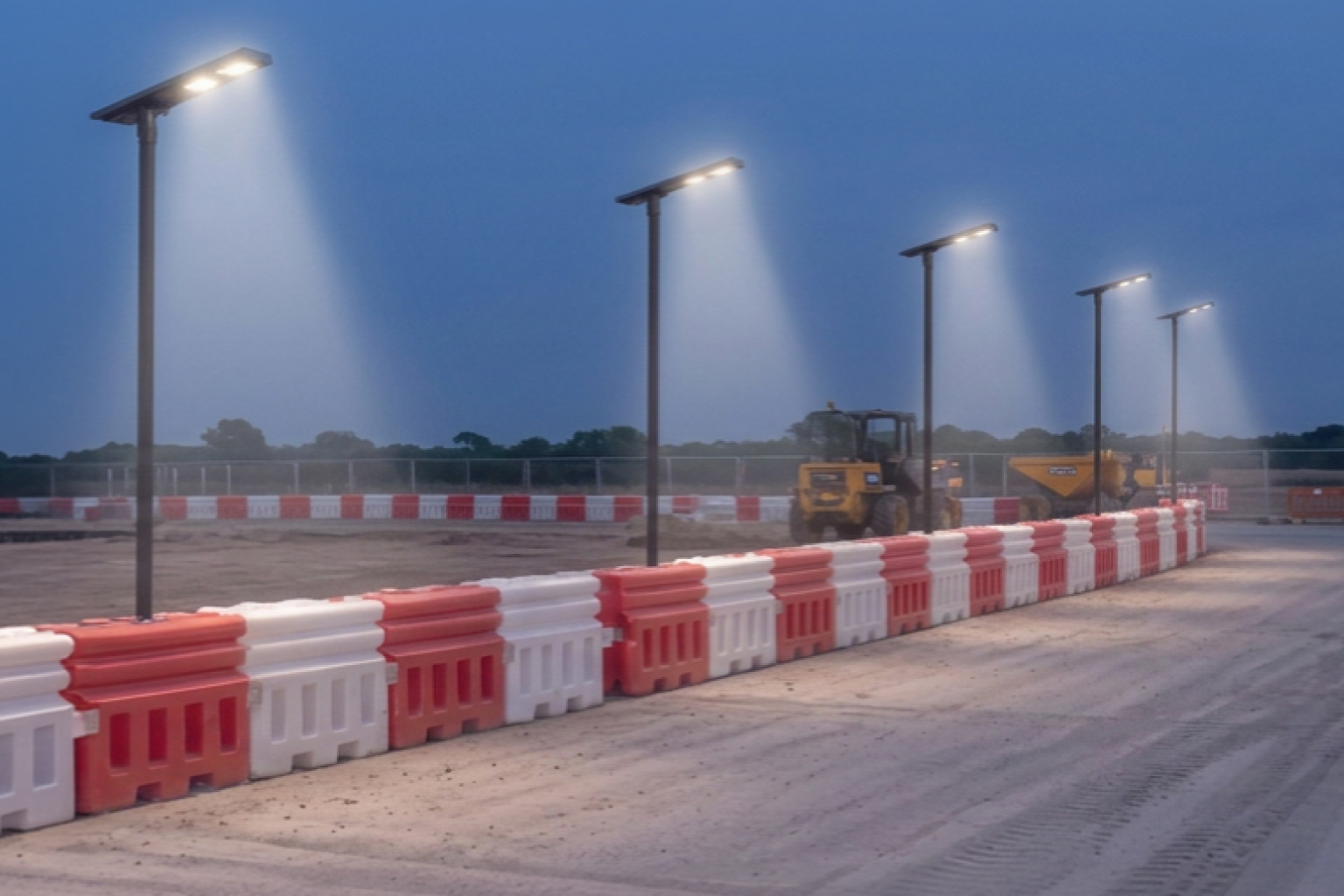
- Project light at the work and the routes in-use. Check for any shadows that may be cast by plant and stacked materials.
- Ensure floodlights and area lights are angled so they don’t dazzle workers or anyone approaching the boundary. Always remember that glare can obscure hazards as effectively as darkness.
- Project light upon the routes people use to enter and leave, along with the active work face, so crews arrive and go home under sufficient lighting.
- Always keep spare lighting onsite so a failed unit doesn’t shut down a whole working area.
For reliable, cable-free site lighting, the BryLux 1000 delivers a powerful 7,840-lumen output from a fully integrated solar unit. With no cabling or trenching required and a long-life battery providing 24+ hours of autonomy, it offers a simple, sustainable lighting solution for outdoor work areas
Keep Your Lit Site Trip-Free with Cable Management
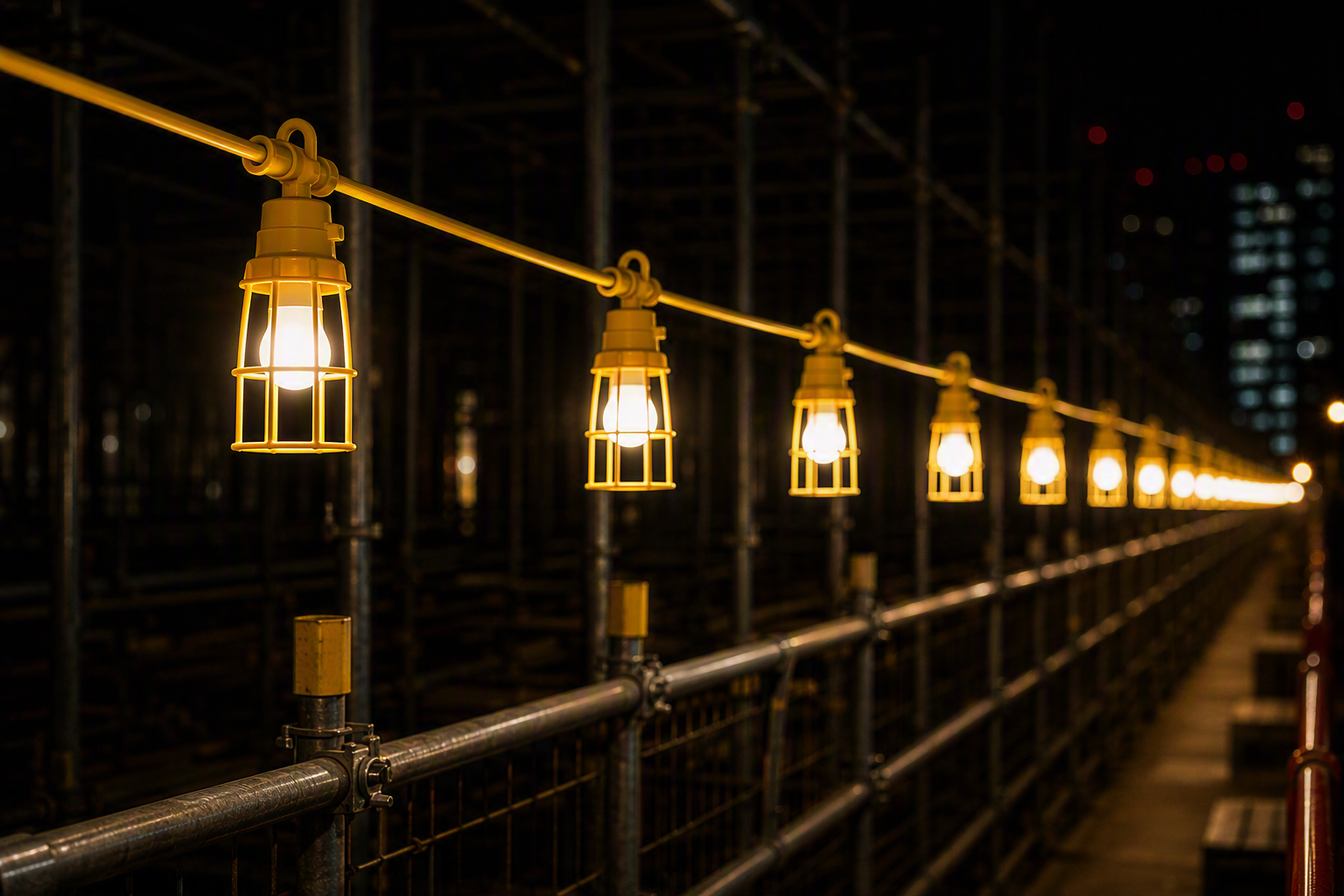
In most cases, more lighting means more cables - and trailing cables are one of the quickest ways to turn a well-lit zone into a serious safety hazard. This is only compounded in winter, when wet ground and low light hide cables that would be obvious in summer. Cable management is always worth planning before the first light goes on.
Plan Cable Runs Before You Switch On
Bryson’s advice is to route your lighting with care in any zone where mains or generator-fed lighting is required. Here are some tips on getting routing right:
- Run your lighting cables along boundaries and edges rather than across walkways and driving routes.
- Where it’s necessary for your cable to cross a route, ensure it’s protected by a cable ramp or cover, or suspend it overhead at a safe height.
- Ensure all connections are kept off the ground and clear of standing water, keeping all circuits protected with an RCD.
- Inspect all leads regularly for signs of damage from water, frost and site traffic.
For cable management via walls and ceilings, Bryson’s TIDI Heavy Duty Cable Management Hooks are a strong, cost-effective solution. They support a maximum weight of 10kg, hold up to 9 x 110v Arctic Cables and can be spaced every two metres.
Go Cable-Free Wherever Possible
Always remember: the simplest trip hazard to manage is the one you never create. Rechargeable and battery powered lighting removes many risks from the equation.
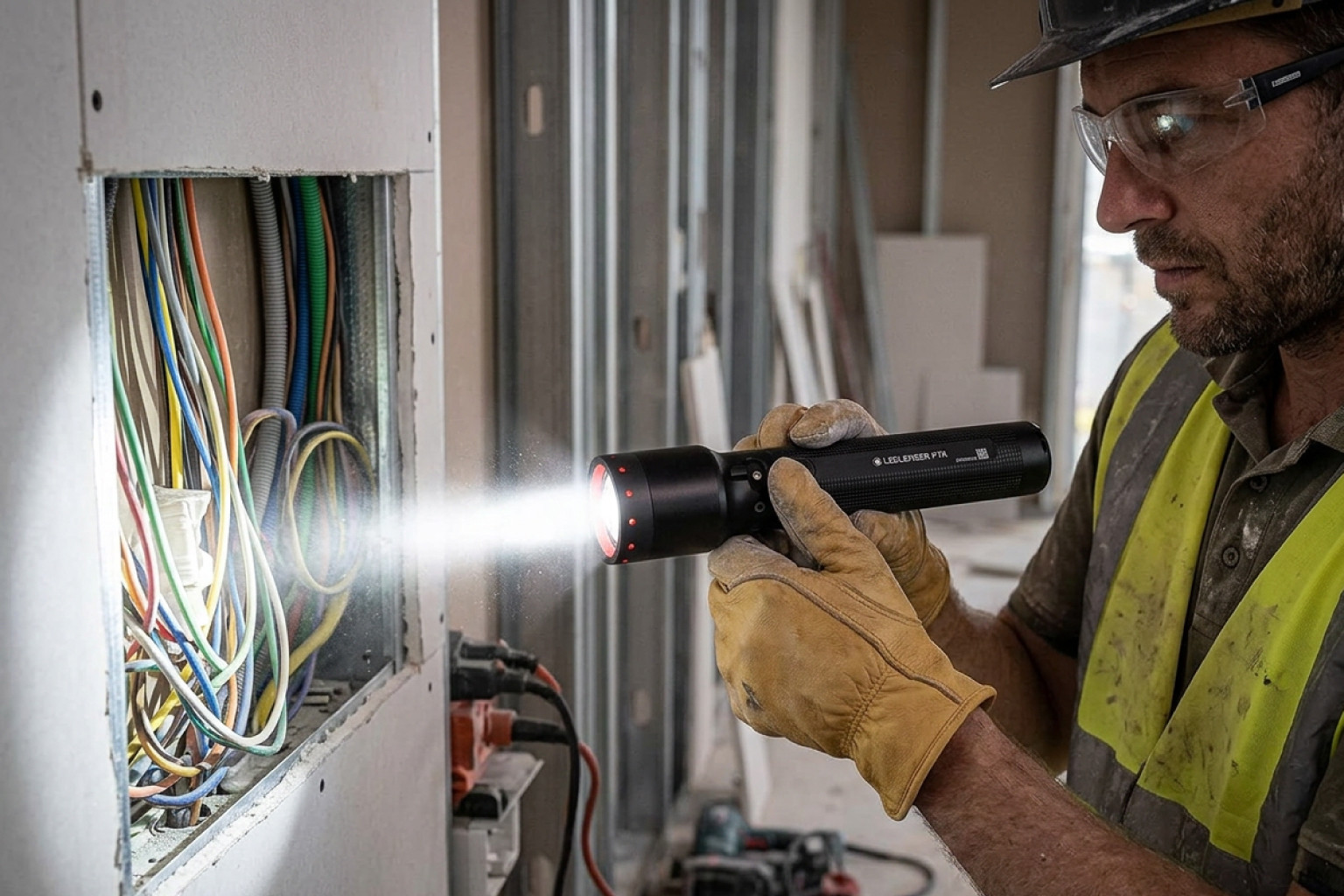
Solutions such as the LED Rechargeable Cliplight, the LED Rechargeable Worklight and the LEDLenser Rechargable Torch draw on tool batteries rather than a fixed supply. Fewer leads on the ground means fewer trips and cleaner walking routes.
Mark The Ground With Cat's Eyes And Reflective Road Studs
Lighting the area above your walking routes only goes so far: the ground itself must be able to guide both people and vehicles. This is where reflective road studs - or cat’s eyes - can provide real value.
The solutions reflect headlight and torchlight back towards the driver, picking out the edge of a haul road or the line of a walkway before it would reveal itself under general lighting. These are low-cost additions to your worksite that provide a real payoff in winter:
- Temporary studs adapt to changing site layouts and short-term traffic routes.
- Permanent studs fix into the surface for established roads and crossings.
- Colour options let you easily separate pedestrian routes from vehicle movements.
Used along walkways and crossing points, these solutions keep everyone on the safe line when visibility drops.
Kit for the Individual: Hands-Free Lighting
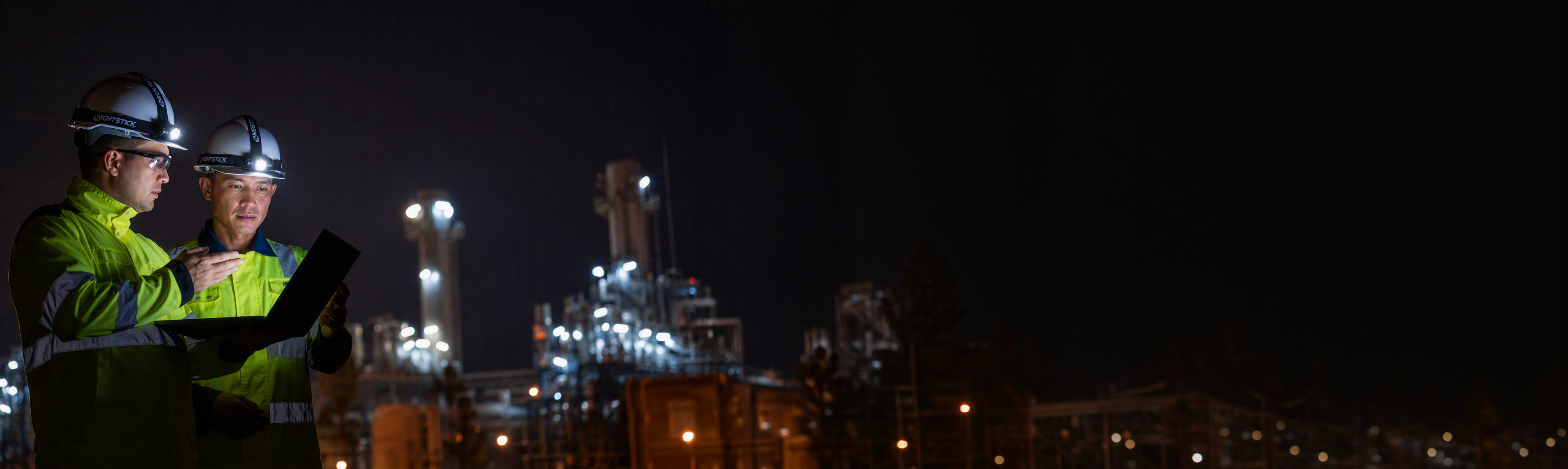
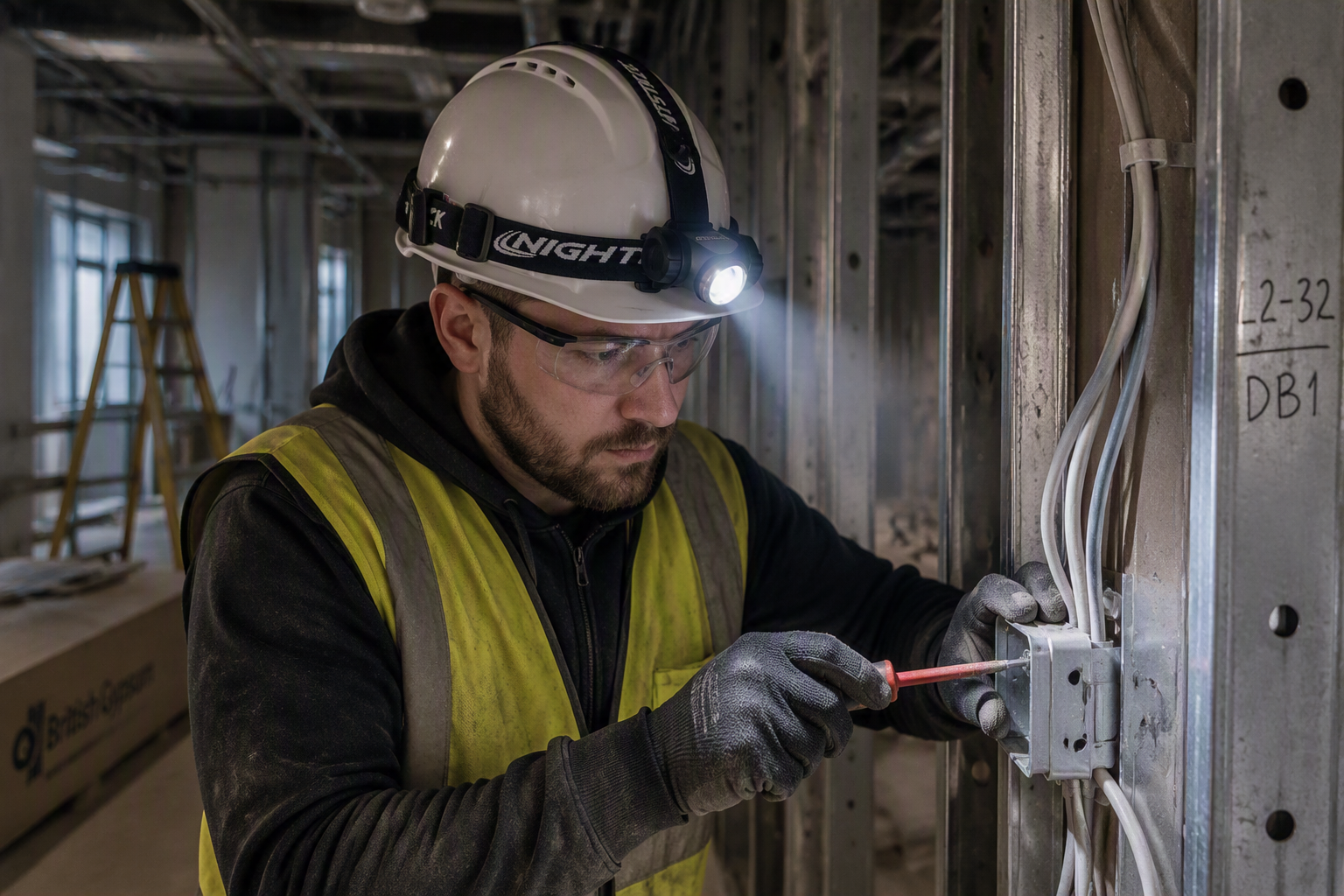
Fixed and area lighting sets the scene, and the person doing the work still needs light exactly where their hands are. A head torch solves the problem, pointing wherever the wearer looks, leaving both hands free for the task at hand.
The Nightstick 4708B Headlamp is built for this. It delivers 1000 lumens with an adjustable beam and an IP-X7 waterproof rating, holding up to winter rain and working through inspections and detail tasks in unlit corners. For anyone moving around the site after dark, it can represent the difference between guessing and seeing.
Your Pre-Winter Lighting Checklist
Before the clocks go back, walk your site with these questions in hand:
- Are light levels matched to each task and each route, with no dark gaps?
- Have you checked for shadows thrown by plant and stored materials?
- Are cable runs planned off walkways, with crossings protected?
- Have you switched to cordless lighting anywhere that would remove trailing leads?
- Are walkways and crossings marked with reflective studs?
- Does every crew member have a working head torch for hands-free tasks?
- Is there emergency lighting where a power loss would leave people in the dark?
- Do you hold spare units and charged batteries on site?
Winter working is far safer and more productive when the lighting is planned in advance rather than patched together in the dark. Get the set-up right now and your crew keeps its pace and its footing through the shortest days of the year.
Get Your Site Winter-Ready With Bryson
The key to safe working in low light conditions this winter is early planning, and Bryson is here to help. Book an appointment now to discuss your lighting requirements, or browse our full selection of lighting solutions now.

 Loading, please wait