


At Bryson, our focus is to make this ever-changing landscape easier to understand - and easier to act on. We supply protective equipment that not only performs on site, but also meets current UK and international standards. This guide breaks down the latest certified requirements for helmets, footwear and eyewear, explaining what they mean in practice and how they affect compliance in 2025 & 2026.
Safety Helmets
EN 397: The Core Industrial Standard
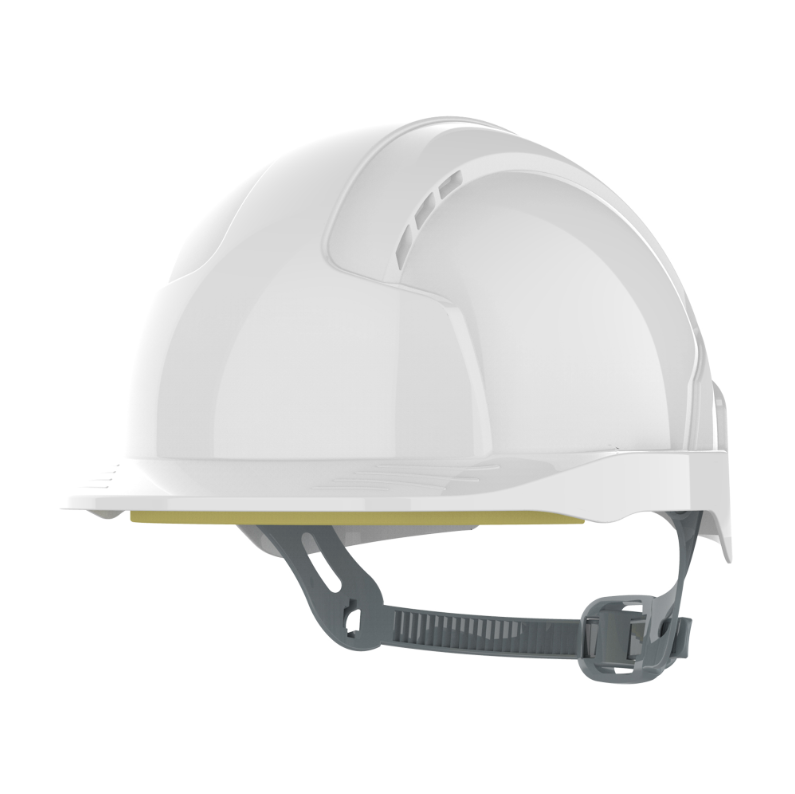
For most construction and industrial environments, BS EN 397:2012 + A1:2012 remains the primary safety helmet standard. Published by the British Standards Institution (BSI), it outlines performance and testing requirements for helmets used in areas where there is a risk of impact or falling objects.
To meet EN 397, helmets must pass strict tests that measure:
-
Shock absorption (how well the shell disperses impact energy)
-
Penetration resistance (how well it withstands falling objects)
-
Retention system strength (how securely the helmet stays in place)
Manufacturers may also include optional features such as resistance to extreme temperatures, lateral deformation, or electrical insulation. Our advice? Always look at the spec sheet before you buy.
Updated Helmet Requirements Under EN 397:2025
The new update to EN 397 set to be mandated in April 2026, introduces several changes that affect how industrial helmets are classified, tested, and approved. These changes focus on impact protection, accessory compatibility, ergonomics, and the way manufacturers prove compliance:
-
EN 397:2012 will now be reassessed under two new categories.
-
Type 1 covers on-crown impact protection.
-
Type 2 includes on-crown and off-crown impact protection.
This creates clearer separation between helmet performance levels, giving safety managers more accurate information when selecting protection for different tasks and site conditions.
Updated Release Forces and Electrical Testing
Chinstrap release forces now follow two levels:
-
Type 1 must release at over 150 N
-
Type 2 must release at over 500 N
Electrical insulation testing has also been updated, with requirements moving to EN 50365:2023. This change introduces a more modern approach to electrical protection, giving teams better clarity when specifying helmets for electrical environments.
Accessories and Compatibility Testing
Accessories now have a much bigger role in certification. Items such as visors, ear defenders, helmet lamps, and other attachments must be fitted during specified tests.
This ensures that any accessory that could influence the performance of a helmet is assessed as part of the product. The goal is simple: a helmet must maintain performance even when fully equipped.
Manufacturers must also provide clarity on which accessories are compatible. This protects workers from unknowingly using attachments that affect the helmet’s protective capability.
New Ergonomics and Mobility Assessments
EN 397:2025 introduces an ergonomics and mobility requirement. This evaluates the way the helmet fits, how it moves during use, and how easy it is to operate with accessories attached.
The focus is on comfort, stability, and the way a helmet performs during real on-site movement. A secure, stable fit improves confidence during long shifts and helps reduce distractions.
What Happens Next
- Helmets certified to EN 397:2012 will be reassessed as Type 1
- EN 12492 helmets will be assessed as Type 2
-
Existing EN 397:2012 helmets can continue to be used and sold until their CE or UKCA certificate expires

EN 12492: For Height & Rope Access Work
While EN 397 helmets are designed for general construction, EN 12492 applies to mountaineering and height-access activities. The key difference lies in testing conditions. EN 12492 helmets are evaluated for side impact protection and require a chin strap that resists higher pull forces.
On most sites, EN 397-certified helmets remain the correct choice. EN 12492 is reserved for tasks where there's a genuine risk of side impact or where workers need a secure fit during rope-access or climbing work. If you're looking for them, of course we've got them.
Selecting the Right Helmet for the Job
The Health and Safety Executive (HSE) states that head protection must be provided wherever there's a risk of injury from falling or moving objects. Employers should check that helmets carry the correct standard marking before issue.
Bryson's product specialists can help identify the right option for each work environment - whether that's a standard EN 397 helmet or a height-compliant EN 12492 design.
Safety Footwear
EN ISO 20345:2022 - The Updated Framework
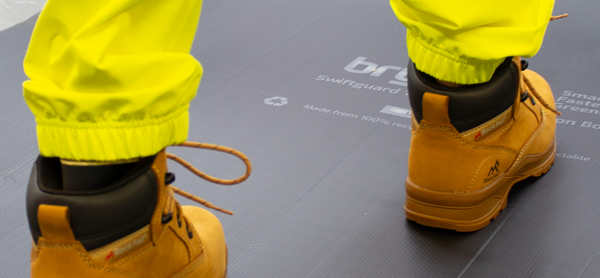
Footwear is another category where standards continue to evolve. The EN ISO 20345:2022 standard, published by BSI, outlines the minimum performance requirements for safety footwear used in workplaces. It covers impact resistance, compression resistance, water penetration, slip resistance, and sole durability.
Safety footwear must include a protective toe cap capable of withstanding a 200-joule impact. Depending on the environment, additional protective features are identified through classification codes such as S1, S2, S3, S6, and S7.
S7 Footwear: The Next Step in Protection
The S7 classification builds on the features of S3 footwear by adding full waterproofing to the entire boot, not just the sole. This makes it suitable for outdoor or wet conditions such as civil engineering, groundwork, and concrete work. An S7-rated boot includes:
-
Protective toe cap (steel or composite)
-
Penetration-resistant midsole
-
Water-resistant upper and fully waterproof construction
-
Energy absorption in the heel
-
Slip-resistant outsole
HSE guidance confirms that employers must ensure safety footwear is appropriate for the risks present on site. For most modern projects, S7 footwear offers the reliability and comfort that keep workers protected during long, demanding shifts.
Transitioning from Older Footwear Standards
The 2022 update to EN ISO 20345 replaced the earlier 2011 version, introducing clearer testing and marking requirements. Older products certified under the previous version remain valid until their certification expires, but new models entering the market will carry the 2022 code.
Bryson continually reviews all PPE in its range to confirm compliance with the latest standards, so customers can be confident that every pair of boots meets current certification.
Protective Eyewear
The Shift from EN 166 to EN ISO 16321
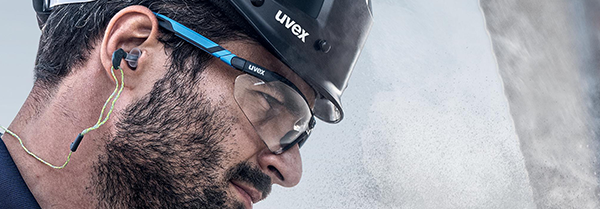
For decades, EN 166:2001 was the benchmark for safety eyewear in Europe. It set the foundation for optical clarity, impact resistance, and field-of-vision testing. However, technology and testing have advanced significantly since then.
To reflect this, the EN ISO 16321 series was introduced by the International Organization for Standardization (ISO) and adopted by BSI in the UK. The update modernises the way eyewear is tested, making the certification process more consistent and reliable across global markets.
EN ISO 16321-1:2022 - The New Standard
The first part of the standard, EN ISO 16321-1:2022, applies to protective eyewear for occupational use. It introduces new optical and mechanical testing procedures, along with more detailed fit assessments. One key improvement is the use of multiple headform sizes during testing, ensuring eyewear fits a wider range of users comfortably.
The transition period allows products certified under EN 166 to remain valid until their certificates expire. After that point, manufacturers must test to the new ISO 16321 standard. The change takes full effect from November 2025, with most suppliers now gradually introducing updated eyewear.
Why the Change Matters
The new testing process is more representative of real-world use. It ensures that safety glasses and goggles offer consistent protection across different face shapes, working conditions, and impact risks.
Bryson has already started stocking eyewear certified under EN ISO 16321, alongside existing EN 166 products. This means customers can continue using approved eyewear while transitioning to the new certification when ready.
Inclusive PPE: New Guidance Under BS 30417

A new British Standard, BS 30417, has been introduced to help employers select PPE that fits a wider range of wearers. The guidance is free to access and focuses on inclusivity across gender, age, ethnicity, body type, and disability. It explains that no single item will fit every user, so employers may need to offer alternative options to achieve a safe and comfortable fit for all staff.
BS 30417 is not a performance or manufacturing standard. Products will not be certified to it. Instead, it supports employers by setting out practical steps for selecting, issuing, maintaining, and reviewing inclusive PPE. It encourages early engagement with employees, ongoing fit assessments and the use of adjustable or configurable equipment where possible.
The standard reflects progress already made in PPE design. Newer testing systems, such as ISO 18526-4 headforms for eyewear and ISO 16976-2 headforms for respirators, draw on more representative global data. This has helped manufacturers develop products that fit a wider variety of people with fewer compromises.
BS 30417 aligns with the industry's broader move toward better fit and user-focused design. It also supports the goals of the CIOB PPE That Fits campaign, which highlights suppliers who prioritise inclusive PPE.
Staying Ahead of Compliance
Why It's Worth Paying Attention
Using equipment tested to the correct standards isn't just a compliance exercise. It's the foundation of workplace safety. When PPE is properly certified, it performs as expected during impact, exposure, or strain.
Staying up to date also reduces downtime from injuries, avoids potential enforcement action, and builds confidence across teams. Workers trust equipment more when they know it's been tested to the latest standards.
How Bryson Supports Compliance
Bryson's technical team tracks standard updates through BSI publications, HSE guidance, and direct manufacturer partnerships. That means every product supplied is aligned with the latest version of its relevant certification.
For contractors, this removes the uncertainty of choosing between different markings or versions. Whether it's helmets marked EN 397, boots labelled EN ISO 20345:2022 S7, or eyewear tested to EN ISO 16321, Bryson ensures every product is compliant and reliable.
Need Advice? We're Here.
Need advice on PPE standards or help checking your current equipment? Contact the Bryson team today for a product review and guidance on staying compliant.

 Loading, please wait